When a fluorescent shade leaves the lab looking perfect, then dulls during extrusion or a baking cycle, the loss is rarely “just colour”. It is a sign that the pigment package was not matched to heat, shear, and chemistry. Selecting fluorescent pigments for plastics and coatings that face higher processing temperatures starts with disciplined, application-led choices.
Selecting Fluorescent Pigments That Survive Heat In Plastics Processing
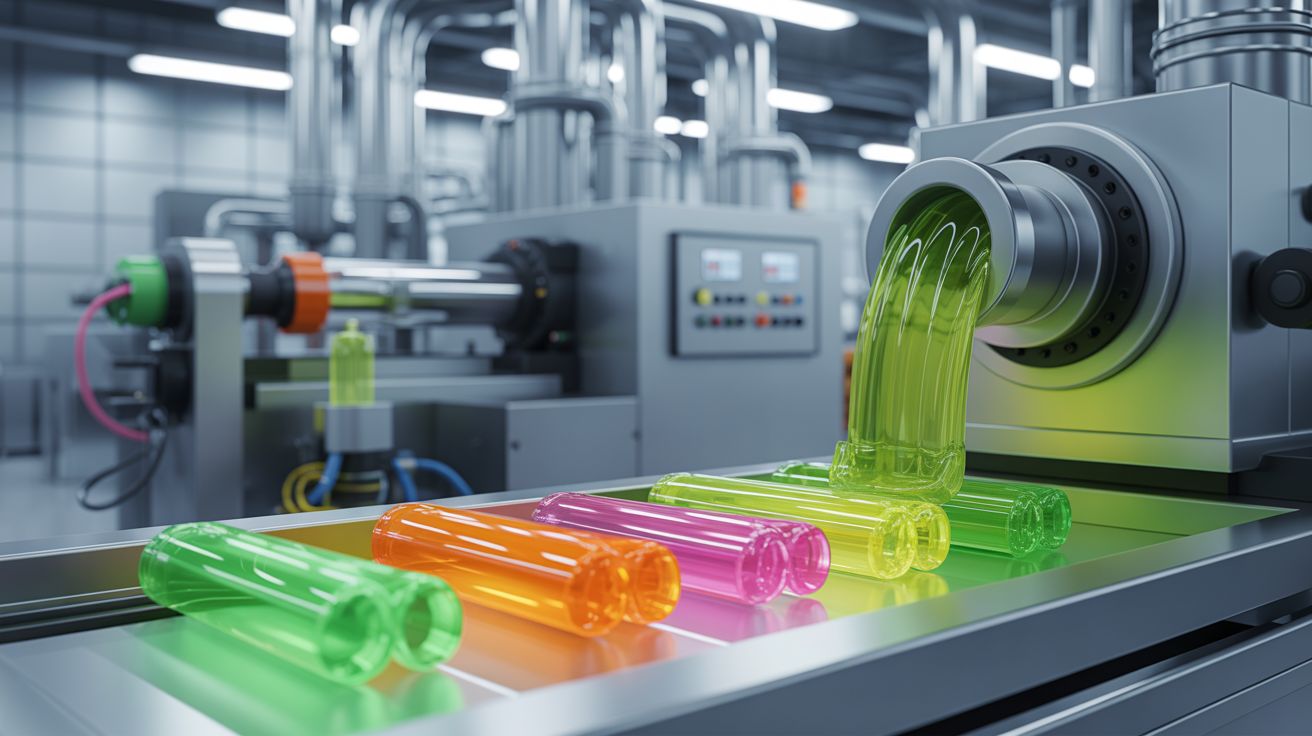
High-temperature processing in plastics typically combines elevated melt temperatures with strong shear, both of which can reduce fluorescence and trigger plate-out or migration. When choosing fluorescent pigments for plastics, check:
- the polymer and process window (extrusion, injection moulding, masterbatch compounding)
- dispersion behaviour, since poor dispersion can mimic thermal degradation
- suitability for food-contact or regulated end uses where relevant
Radiant Color supports plastics and PVC users with application-specific options for plastics & PVC and product selection via the Product Finder.
Selecting Fluorescent Pigments For High-Temperature Curing In Coatings
In coatings, the threat is often bake temperature plus solvent exposure. When choosing fluorescent pigments for coatings, prioritise:
- compatibility with solventborne or waterborne systems
- resistance to strong solvents and cure conditions
- stability of the resin matrix that carries the fluorescent component
Radiant Color’s coatings portfolio is tailored for paints & coatings, including systems where robustness matters as much as brightness.
Radiant Aerosol Pigments for Smooth, Bright Coverage
|
Supporting Details That Reduce Trial-And-Error
A practical rule: treat fluorescent pigments like a performance ingredient, not a simple tint. As materials scientists often note, fluorescence depends on protecting the colourant within a stable matrix, if the carrier fails under heat, brightness follows.
Radiant Color builds on more than 80 years of fluorescent innovation and offers thermoset-resin-based options such as its low-formaldehyde GML technology for demanding environments.
Analysis And Practical Insights For Reliable Colour Outcomes
The best results come from aligning pigment chemistry with the whole process, polymer, additives, residence time, and post-processing. This is why selecting fluorescent pigments for high temperature processing should be done alongside dispersion planning and end-use testing, not after a colour match.
Next Steps
If you are specifying fluorescent pigments for plastics or coatings under higher heat, use Radiant Color’s Product Finder to shortlist candidates, then speak with our team via the contact page for formulation guidance and performance validation.